
Infection Control and IAQ: What Healthcare Leaders Are Missing
- David Mallinson

- Mar 26
- 2 min read
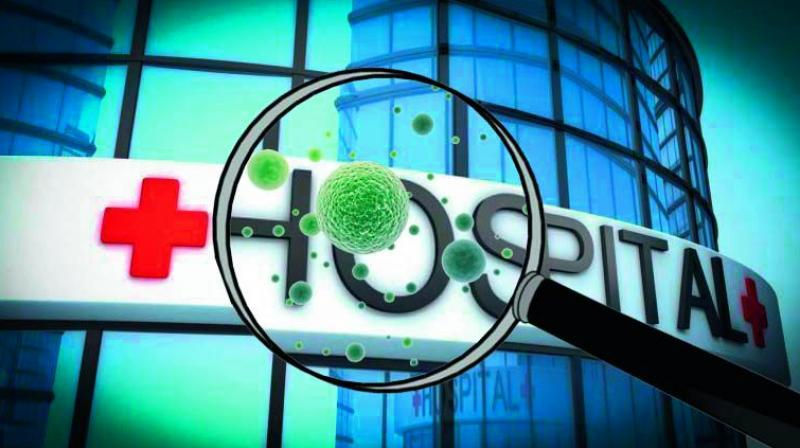
In healthcare, infection control is rightly treated as critical.
Protocols are rigorous.Standards are defined.Outcomes are measured.
But there is a blind spot that still exists in many facilities:
We manage infection risk intensely…while often assuming the quality of the air that carries it.
Infection Control Is Not the Same as Air Quality
Infection control typically focuses on:
• surface cleaning and disinfection
• hand hygiene compliance
• sterilisation protocols
• isolation procedures
These are essential.
But they primarily address contact-based transmission.
What they do not fully address is:
👉 what is continuously moving through the air
The Airborne Reality
Air is not static.
In a hospital environment, it is constantly:
• circulating through HVAC systems
• mixing between spaces
• carrying particles, pathogens, and pollutants
Even in well-designed facilities aligned with ASHRAE standards, performance can vary due to:
• occupancy fluctuations
• maintenance drift
• system inefficiencies
Which means:
Design intent does not always equal real-world performance.
The Missing Layer: Continuous IAQ Visibility
Most healthcare facilities can tell you:
• infection rates
• patient outcomes
• water quality compliance
Far fewer can tell you - in real time:
• particulate levels
• ventilation effectiveness (CO₂)
• airborne contaminant trends
This is the gap between:
infection control and environmental performance
Why Infection Control and IAQ Matters More Now
Healthcare environments in the GCC - including Saudi Arabia, United Arab Emirates and Oman - are:
• expanding rapidly
• becoming more complex
• increasingly expected to meet global standards
At the same time:
• buildings are more sealed
• reliance on mechanical ventilation is higher
• environmental conditions are more controlled - and more critical
This makes air performance not just a design issue…
But an operational one.
Passive vs Active: A Critical Distinction

Another area often overlooked is the difference between:
Passive strategies
• filtration• ventilation• air changes
These are essential - but they rely on:
air passing through a system
Active strategies
• technologies that work within the airspace
• continuous reduction of airborne contaminants
These operate:
where people actually breathe
The key point:
Passive and active approaches are complementary - not interchangeable.
But they are often treated as if they are the same.
From Compliance to Confidence
Healthcare has historically been built around:
compliance-based design
Meeting standards at handover.
But the future is shifting toward:
performance-based operation
Where environments are:
• measured continuously
• validated in real conditions
• adjusted dynamically
What Healthcare Leaders in the GCC Should Be Asking

Instead of:
“Was the system designed correctly?”
The more relevant questions are:
• What is the actual air quality right now?
• How is it changing over time?
• What is the impact on patients and staff?
• Where are the unseen risks?
The Strategic Opportunity
This is not about replacing infection control.
It is about completing it.
Because when IAQ is integrated into healthcare strategy:
• infection risk management becomes more robust
• environments become more transparent
• facilities teams become more proactive
• clinical confidence increases
Final Thought
Infection control protects patients from what we can see and manage.
Indoor air quality addresses what we often cannot see - but are continuously exposed to.
The next evolution in healthcare environments is not more protocols.
It is:
understanding - and verifying - the air itself.


Comments