


Breathe Better. Work Better. Live Better
خلق هواء أكثر صحة للجميع
في الدراسات والتطبيق العملي، تبين أن تقنية تنظيف الهواء من حلول AtmosAir توفر ما يلي:
AIR PURIFICATION PRODUCTS
PORTABLE PRODUCTS
IAQ MONITORING &SENSORS
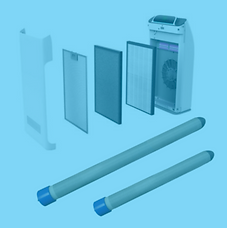
REPLACEMENT COMPONENTS


خلق هواء أكثر صحة للجميع
في الدراسات والتطبيق العملي، تبين أن تقنية تنظيف الهواء من حلول AtmosAir توفر ما يلي:
Commercial Indoor Air Quality in the GCC
Indoor Air Quality GCC
Across the GCC - including Oman, Saudi Arabia (KSA), the UAE, and neighbouring markets - commercial buildings operate in some of the world’s most challenging indoor air environments. Extreme heat, high dust loads, urban pollution, and year-round air-conditioning place unprecedented pressure on HVAC systems and indoor air quality (IAQ).
For building owners, developers, and government stakeholders, clean indoor air is no longer a comfort issue. It is a public health, productivity, and sustainability requirement.
AtmosAir delivers proven HVAC air purification technologies specifically suited to hot, dusty, continuously air-conditioned buildings common across the GCC.
Applications Across Key GCC Sectors
Education | Schools & Universities
In the GCC, classrooms and lecture halls operate almost entirely in recirculated air. AtmosAir’s bi-polar ionization (BPI) actively treats airborne particles, pathogens, and odors within the occupied space, helping create healthier learning environments while supporting high occupancy and long operating hours.
Healthcare | Hospitals & Clinics
Hospitals across Oman, Saudi Arabia, and the UAE rely on advanced indoor air strategies to support infection control and patient safety. AtmosAir technology complements existing HVAC and filtration systems by actively reducing airborne contaminants in patient rooms, treatment areas, and waiting spaces — where exposure risk is highest.
Hospitality | Hotels, Resorts & Mixed-Use Developments
Guest expectations in the GCC are exceptionally high. AtmosAir helps hospitality operators maintain fresh, clean indoor air across guest rooms, lobbies, restaurants, and conference spaces — even in high-traffic, urban, and coastal environments where outdoor air quality is compromised.
Commercial Offices & Government Buildings
From ministries to corporate headquarters, clean indoor air directly affects workforce productivity, absenteeism, and occupant comfort. AtmosAir systems are designed to operate efficiently in large, high-occupancy buildings common throughout the region.


Designed for GCC Climate & Energy Conditions
AtmosAir's HVAC air purification systems are engineered to:
-
Operate effectively in high dust and sand environments
-
Support continuous HVAC operation
-
Reduce reliance on high outdoor air volumes
-
Complement ASHRAE IAQP (Indoor Air Quality Procedure) strategies
-
Minimize energy penalties associated with high-efficiency filtration
This makes AtmosAir particularly suitable for Net-Zero, ESG, and Vision 2030-aligned buildings across the GCC
.
Scientifically Validated Performance
Independent laboratory testing has demonstrated that AtmosAir bi-polar ionization technology can:
-
Neutralize human coronavirus 229E by more than 99.9%
-
Reduce Influenza A (H1N1)
-
Reduce MS2 (RNA virus)
-
Reduce Escherichia coli and Staphylococcus
These results are especially relevant for healthcare, education, hospitality, and public buildings in the Middle East, where indoor environments are heavily conditioned and densely occupied.
Active Air Purification Where People Breathe
Traditional passive air cleaning technologies only treat air that passes through a filter or device inside the HVAC system. AtmosAir uses active air purification to address contaminants throughout the occupied space, including the breathing zone and indoor surfaces.
This approach delivers:
-
Faster air quality improvement
-
Greater consistency across large floorplates
-
Enhanced performance of existing HVAC filtration
-
Improved indoor air quality without increasing energy demand
Supporting Health, Productivity & Sustainability in the GCC
Clean indoor air is now a strategic asset for:
-
Public health authorities
-
Developers and asset owners
-
Hospitality brands
-
Education ministries
-
Healthcare operators
AtmosAir provides the technology foundation to support healthier buildings, lower operating costs, and long-term sustainability goals across Oman, Saudi Arabia, the UAE, and the wider GCC.
Clean Air Associates
A subsidiary of Strategic Brand Solutions FZ-E
The IAQ authority for the GCC & Middle East
Navigate
Contact
Compass Building, Al Shohada Road,
Al Hamra Industrial Zone – FZ,
Ras al Khaimah, United Arab Emirates
IAQ Standards: ASHRAE | WELL | LEED
Regions: Oman | KSA | UAE | Qatar | Kuwait
Sectors: Healthcare | Hospitality | Education | Government


Disclaimer
© Copyright Strategic-Brand-Solutions FZ-E
